
AI-Native Engineering: Moving From AI Assistance to AI Collaboration
AI-native engineering is not about handing a codebase to an agent. It is about redesigning the engineering loop so people and AI can plan, build, verify, and learn together.
Abhishek Raj
Most teams using AI are measuring the wrong thing: lines of code generated. The metric that matters is time from a customer problem to a verified outcome. AI-native engineering is the practice of redesigning that entire path—not handing a ticket to a chatbot and hoping for the best.
That distinction became real for me while building browser automation, compliance workflows, and internal operational systems. In those systems, a convincing answer is useless if it routes work to the wrong place, misses a rule, or leaves an operator to clean up a silent failure. I care less about how much an agent can write and more about whether the next person can trust what it did.
The Shift: From Typing Faster to Learning Faster
Autocomplete made individual developers faster. Coding agents change the unit of work: an engineer can now delegate codebase exploration, first-pass implementation, test creation, and documentation. But the bottleneck moves upstream. If the requirement is fuzzy, the context is stale, or the checks are weak, an agent just reaches the wrong destination sooner.
The useful question is not "Can AI build this?" It is "What evidence would convince us this is safe to ship, and how quickly can we collect it?" That reframes AI as part of a delivery system.
The Loop I Would Actually Use
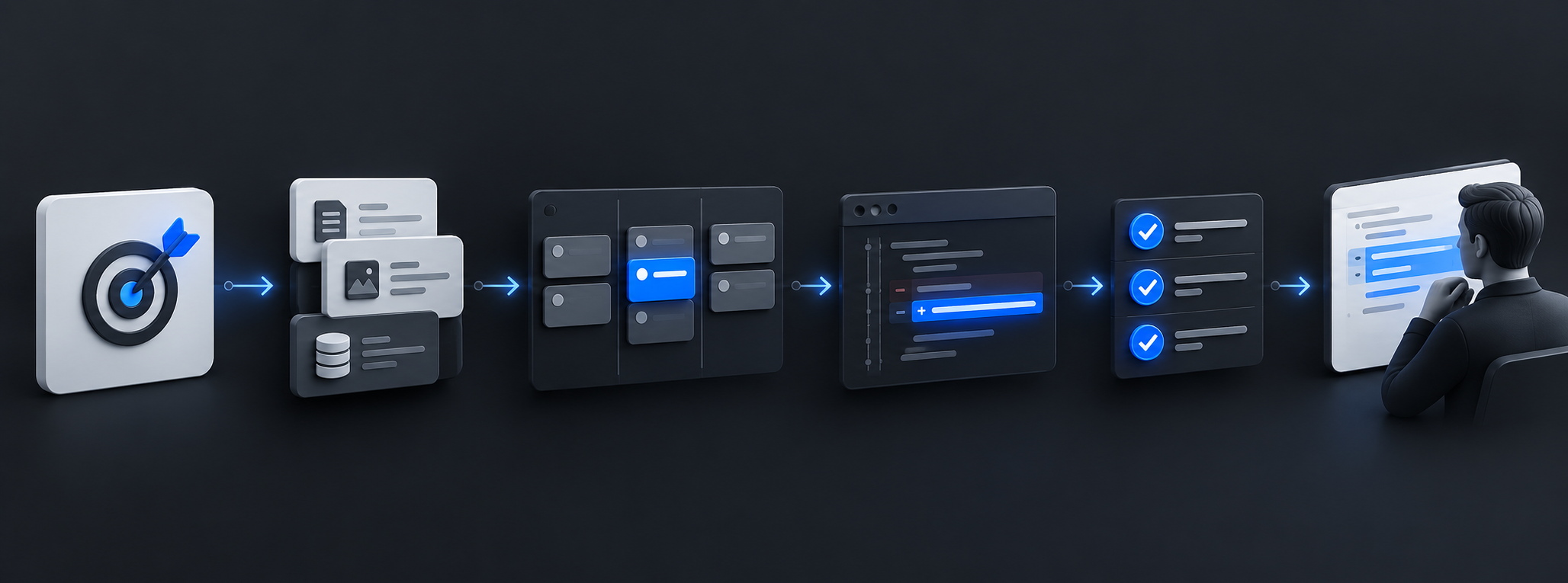
For a medium-sized product change, use six explicit steps:
The detail people miss is the fourth step. Small diffs are not old-fashioned caution; they are how you keep AI work legible, reversible, and fast to verify.
Where AI Earns Its Keep
AI is unusually good at turning scattered information into a starting point: mapping an unfamiliar module, locating duplicate logic, drafting tests around known behavior, or translating a migration plan into repetitive edits. It is less trustworthy when product intent is missing, authorization is involved, or the correct answer depends on a customer promise that only exists in someone's head.
That makes senior engineering judgment more valuable, not less. The high-leverage work is framing the problem, choosing boundaries, identifying failure modes, and rejecting a plausible but wrong answer.
The Guardrail Test
Before letting an agent touch a workflow, ask four questions. Can it see the relevant conventions? Can it prove its change works? Can a person understand the diff in minutes? Can the change be rolled back? If any answer is no, fix the engineering environment before adding more autonomy.
Useful guardrails are boring: repository instructions, tests that actually fail for the right reason, scoped credentials, CI, preview environments, and a definition of done. Boring infrastructure is what turns AI speed into compounding speed.
A 30-Day Starting Point
Pick one repeated, low-risk task: adding a validated form field, writing regression tests, or documenting an endpoint. Run it through the same agent workflow for a month. Track elapsed time to reviewed merge, rework, escaped defects, and how often the developer had to correct missing context. Then improve the weakest stage.
The teams that win with AI will not generate the most code. They will build the fastest loop for turning uncertain work into trusted decisions.