
The AI-Native Engineering Playbook: Context, Agents, Graphs, and Trust
The durable advantage in AI-native engineering is not a single model or framework. It is a delivery system built around useful context, bounded agency, verification, and learning.
Abhishek Raj
AI-native engineering is maturing from experimentation into a practical operating model. The tools will keep changing, but the underlying lesson is stable: reliable AI systems are designed as systems. They need context, clear responsibilities, safe capabilities, verification, and feedback.
My point of view comes from shipping systems where automation has to coexist with people doing real work: browser flows, business rules, internal queues, and customer-facing applications. In that world, an AI feature is only useful when it reduces work without creating a hidden support burden. This is the playbook I would use on my own production workflow—not a list of things an ideal team should do someday.
Context Is the Foundation
An AI agent cannot make a good decision without a current goal, relevant facts, constraints, and source-of-truth access. Context engineering should be treated as product and platform work, not as a last-minute prompt edit. Curated information, clear architecture, and trustworthy retrieval give every agent a better starting point.
Agency Must Be Bounded
Give agents the smallest useful authority. Use tools with narrow inputs and predictable outputs. Separate reading from writing, add approval gates for meaningful side effects, and preserve an audit trail. Autonomy is valuable only when it is paired with accountability and recovery.
Use the Right Workflow Shape
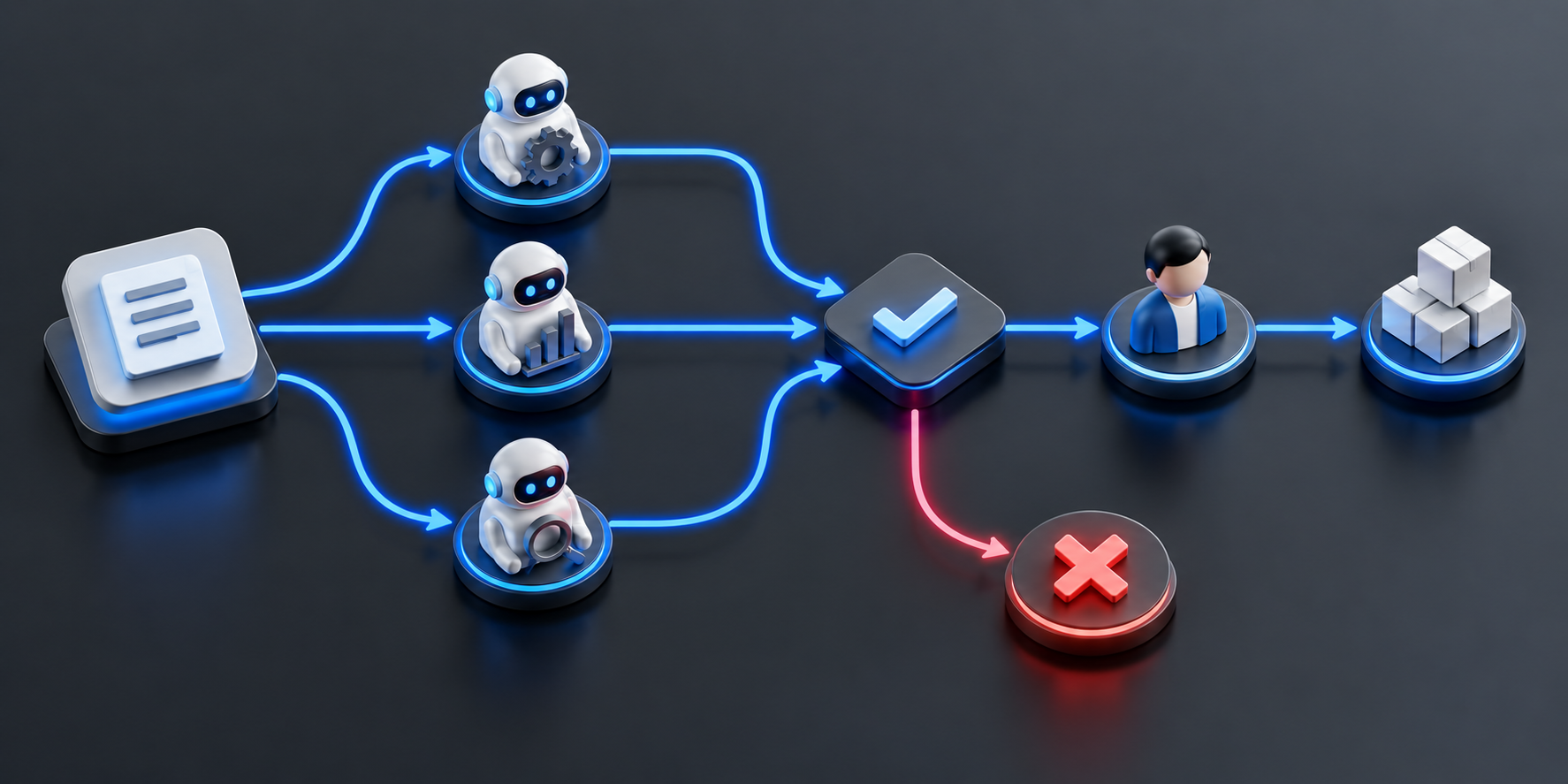
One agent is often enough for a focused task. Use subagents when responsibilities are independent and their outputs can be checked. Use a workflow graph when work has durable state, branches, parallel steps, retries, or human approvals. A more complicated architecture should earn its cost through better outcomes.
Verification Creates Trust
AI-generated output is not the finish line. Tests, validators, source citations, policy checks, previews, code review, and production monitoring are how a team knows whether the work is correct. Design verification into the workflow rather than asking someone to inspect everything at the end.
Make Learning Part of Delivery
Log failures safely, review representative runs, and turn recurring mistakes into better context, tools, tests, or policies. The organizations that compound value from AI will be the ones that learn from every interaction instead of repeatedly rediscovering the same failure modes.
The Practical Next Step
Choose one workflow where quality can be measured: code maintenance, internal support, document processing, or research. Map the current process, identify the necessary context and guardrails, run a limited pilot, and evaluate the result against the old way of working. Build capability one verified workflow at a time.
The future of engineering is not engineers versus AI. It is engineers building better systems of collaboration—with AI earning more responsibility as the evidence supports it.
The One-Sentence Playbook
Give an agent the smallest useful context, the narrowest useful authority, a way to prove its work, and a clear path to ask for help. Every reliable AI-native workflow is a variation of that sentence.