
Context Engineering for AI Agents: A Practical Guide for Better Results
Context engineering is the discipline of giving an AI agent the right information, tools, and constraints at the right moment—not simply filling its context window.
Abhishek Raj
The most expensive sentence in AI engineering is: "The model is smart, but it doesn't understand our business." Usually the model is not the problem. We gave it a 200-page handbook, three stale chat summaries, and a tool called execute_action. Context engineering is how you stop doing that.
I have seen this outside of AI too. In compliance and operations work, the written rule is rarely the whole story: timing, service type, customer state, and exceptions change what happens next. An agent needs the same operational context a good teammate would ask for before acting. Giving it a PDF and hoping is not a system design.
Context Is a Working Set, Not a Document Dump
Prompt engineering is about the instruction. Context engineering is about everything available when an agent decides: task state, policies, retrieved facts, tool results, project conventions, user preferences, and memory. The design problem is ruthless selection: what must be present for the next decision, and what will distract it?
More tokens do not equal more intelligence. Extra context can be stale, contradictory, expensive, or simply irrelevant. The useful target is the smallest trustworthy working set.
Build a Context Packet
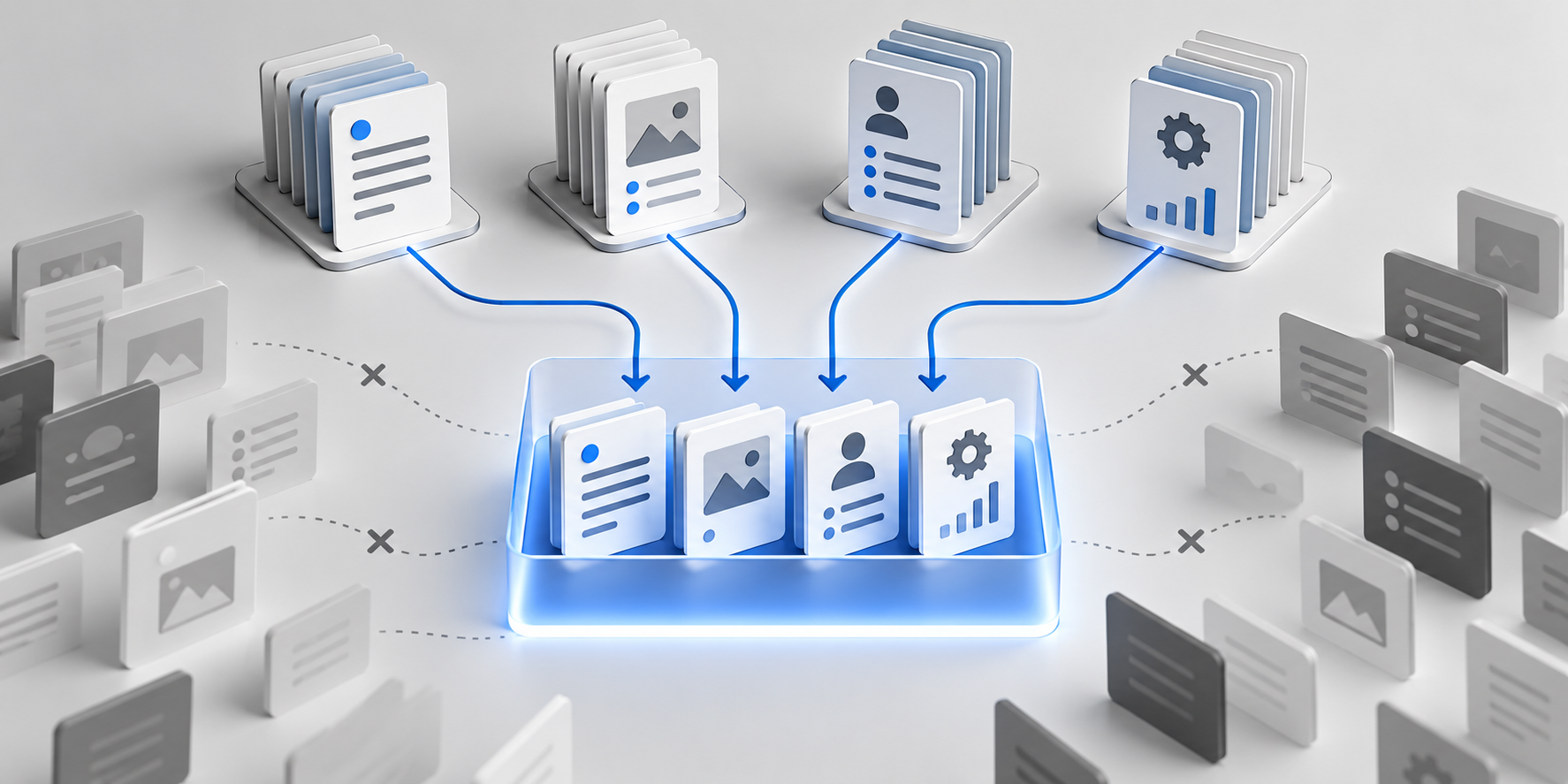
For a meaningful agent action, create a packet with six parts:
This is a practical debugging tool. When an agent fails, inspect the packet before swapping the model. You can often see the missing fact or conflicting instruction immediately.
Separate Instructions, Facts, and Memory
Instructions tell an agent how to behave. Facts describe the world right now. Memory preserves a compact record of useful past decisions. Mixing these together is how an old summary turns into a phantom policy.
Store source-of-truth facts outside the conversation and retrieve them when needed. Use structured handoffs for long work: completed steps, validated evidence, unresolved questions, and recommended next action. A short, inspectable summary beats replaying a 100-message transcript.
RAG Is a Retrieval Problem Before It Is a Model Problem
Retrieval-augmented generation can be excellent, but only when the system finds the right source at the right time. Test retrieval separately: did it return the current policy, the relevant paragraph, and enough provenance for a human to verify it? If not, better wording from the model only makes the wrong answer sound more credible.
Start with a small, curated knowledge base. Improve source quality, metadata, ownership, freshness, and access control before adding complex chunking or a larger vector database.
The Shareable Rule
Give the agent the context you would give a competent new teammate for the next 15 minutes of work—not your entire company history. Clear objective, current facts, allowed tools, and a way to prove the answer. That is context engineering in practice.